
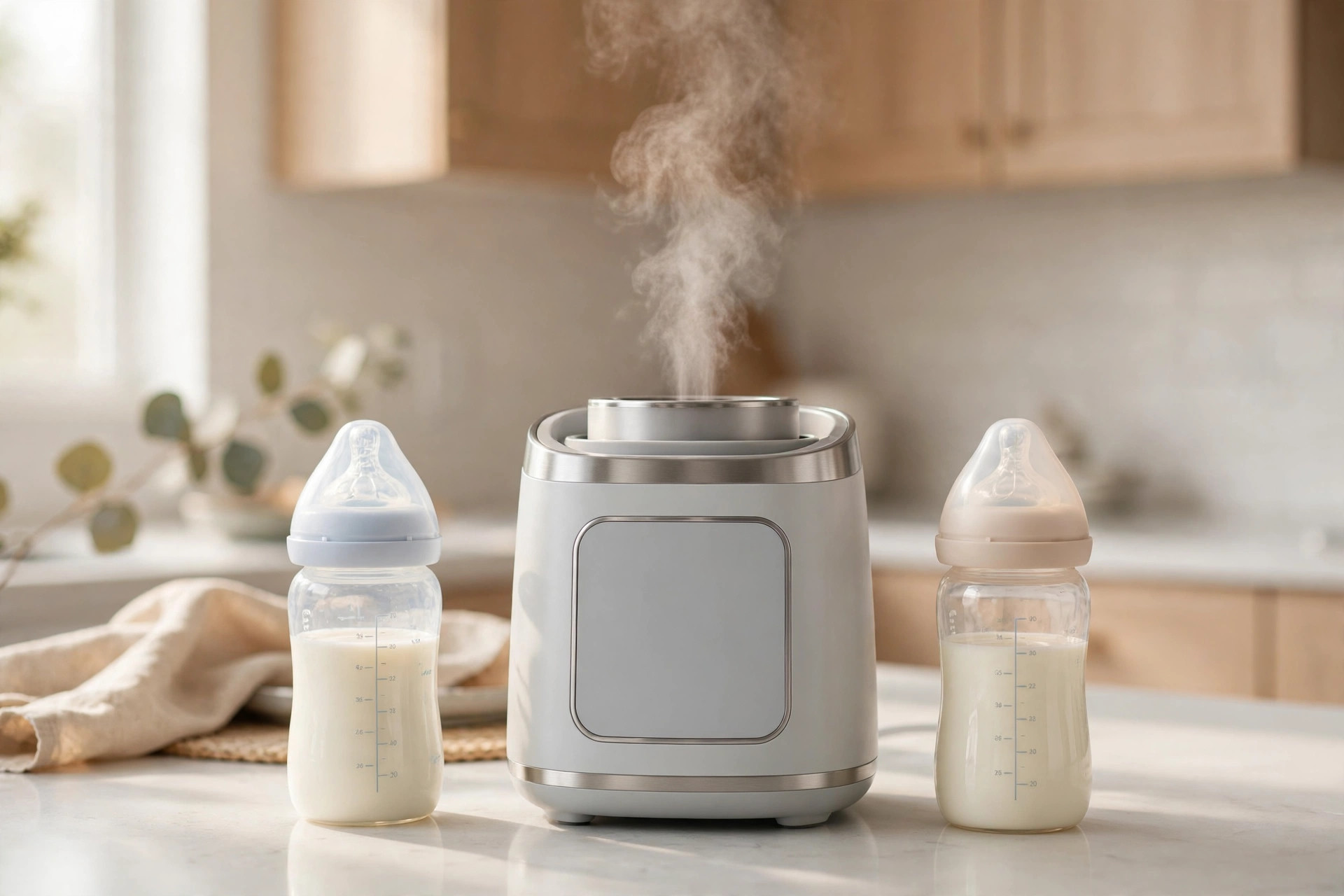
Bottle warmers and sanitizers sit in the “maybe” pile for a lot of parents. Some people never buy either and do fine with hot water and a dishwasher. Others swear by a warmer for every middle-of-the-night feed.
This guide helps you decide what you actually need—warmer, sanitizer, both, or neither—based on how you feed and how much counter space and patience you have.
Who this is for
- Parents using pumped milk or formula who want consistent bottle temperature
- Households deciding whether a sanitizer is worth the footprint
- Anyone overwhelmed by combo machines that claim to do everything
What actually matters
Warming vs sanitizing (different jobs)
Warmers bring milk or formula to a comfortable temperature. Breast milk and formula do not need warming; choose one only if warming fits your routine. Always check temperature before feeding.
Sanitizing reduces germs after cleaning; it does not replace washing. CDC guidance recommends daily sanitizing especially for babies younger than two months, premature babies, or those with weakened immune systems. A separate appliance is optional: follow CDC methods for boiling or steaming compatible items, or use a dishwasher with hot water and a heated drying or sanitizing cycle. Follow the equipment manufacturer’s instructions.
Breast milk needs gentle heat
Overheating can damage nutrients in breast milk. Prefer warmers with gentle or breast-milk modes, or use a bowl of warm water. Skip boiling bags of milk on the stove in a rush.
Speed, capacity, and cleanup
A warmer that takes eight minutes every feed will frustrate you. A sanitizer that only fits two bottles may not keep up with a heavy pumping day. Water reservoirs need regular cleaning so mineral scale does not build up.
How to choose
- Warmer only: overnight feeds matter, and you already sanitize in the dishwasher or by boiling.
- Sanitizer only: you need a compatible steam unit and your baby accepts cold or room-temperature milk.
- Combo unit: counter space is tight and you will use both functions weekly—not “someday.”
- Neither: a suitable cleaning and sanitizing method and cold or room-temperature milk work for your routine.
Common mistakes
- Buying a large dryer/sanitizer combo you run twice, then leave on the counter forever.
- Microwaving breast milk (uneven hot spots).
- Assuming every warmer is safe for breast milk without checking the mode.
- Skipping descaling until the machine slows down or smells off.
Who should skip
- Skip a warmer if your baby takes cold or room-temp bottles happily.
- Skip a dedicated sanitizer when compatible items are washed in a dishwasher with hot water and a heated drying or sanitizing cycle, per CDC guidance.
- Skip combo gadgets if you only need one job done well.
Find current deals
Browse current bottle warmer deals on the All Deals.